
Court Representation
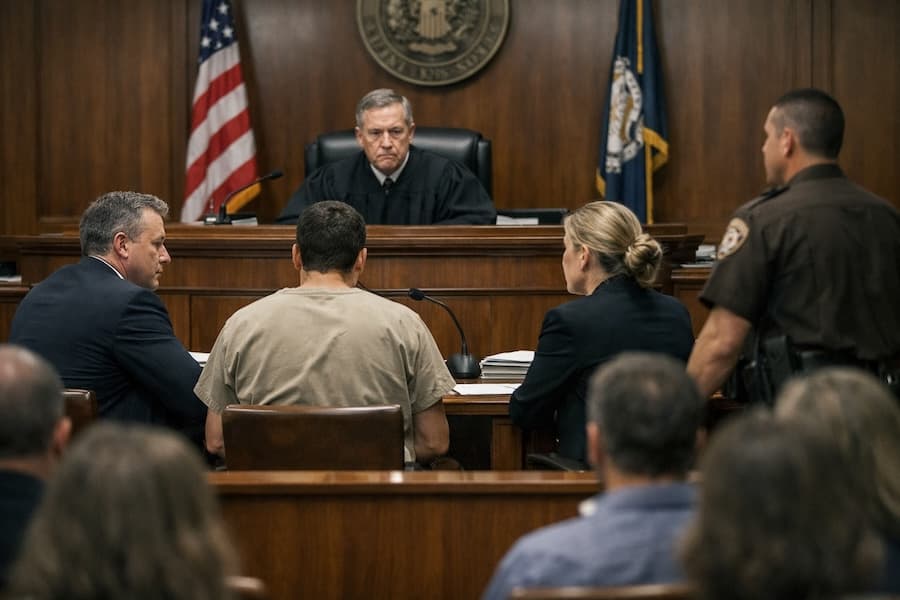
The Executive Office for Immigration Review (EOIR) conducts removal proceedings through immigration courts nationwide. In these civil proceedings, respondents face the possibility of removal (deportation) from the United States. Skilled legal representation is critical to presenting defenses and applications for relief.
Who Qualifies
Any individual in removal proceedings before an immigration judge has the right to be represented by counsel at no expense to the government. This includes those charged with deportability (in the U.S. with violations) or inadmissibility (seeking admission). While there is no right to government-appointed counsel in immigration court, our firm provides comprehensive representation.
Key Features
We handle all aspects of removal defense: master calendar hearings, individual merits hearings, applications for relief (asylum, cancellation of removal, adjustment of status), and presentation of evidence and witnesses. Only licensed attorneys and DOJ-accredited representatives may represent individuals in immigration court.
Duration
Removal proceedings vary significantly in length depending on court backlog, case complexity, and available relief. Cases may take months to years. The immigration court system currently has over 3 million pending cases nationwide.
Bond Hearings
Bond hearings allow detained individuals to request release from ICE custody while their removal proceedings are pending. An immigration judge determines whether the individual is eligible for bond and, if so, sets a bond amount based on flight risk and danger to the community.
Who Qualifies
Bond eligibility depends on multiple factors including manner of entry, criminal history, and current immigration status. Individuals subject to mandatory detention (certain criminal convictions, arriving aliens in expedited removal) may not be eligible for bond. Recent policy changes have affected bond eligibility—consult with counsel to evaluate your specific situation.
Key Features
At a bond hearing, we present evidence of community ties, employment, family relationships, and lack of flight risk or danger. Bond amounts typically range from $1,500 to $25,000 or higher. If bond is denied or set too high, we can appeal to the Board of Immigration Appeals. Bond can be paid through a bondsman or directly to ICE.
Duration
Bond hearings are typically scheduled within days to weeks of the request. If granted, release occurs after bond is posted and processed. Bond decisions can be appealed to the BIA, which adds additional time. Changes in bond policy may affect processing.

Motions to Reopen
A Motion to Reopen asks the immigration court or Board of Immigration Appeals to reopen a closed case based on new facts or evidence that was not available during the original proceedings. This is a critical tool for individuals with final removal orders who have new circumstances warranting relief.
Who Qualifies
You may file a motion to reopen if you have new, material evidence that was not available at your original hearing. Common grounds include: changed country conditions for asylum seekers, new evidence of eligibility for relief, previously unavailable witnesses, or ineffective assistance of prior counsel. In absentia orders may be reopened for lack of notice or exceptional circumstances.
Key Features
Motions to reopen must state new facts supported by affidavits or other evidence. Only one motion is generally allowed. The motion does not automatically stay removal—a separate stay request may be needed. Jointly filed motions (agreed to by DHS) are not subject to time or number limits.
Duration
Filing deadline: 90 days from the final order (with exceptions). In absentia orders based on exceptional circumstances: 180 days. In absentia orders based on lack of notice: no time limit. Processing time varies by court backlog.
Motions to Reconsider
A Motion to Reconsider asks the immigration court or BIA to re-examine a prior decision based on errors of law or fact in that decision. Unlike a motion to reopen, a motion to reconsider is based on the existing record and does not introduce new evidence.
Who Qualifies
You may file a motion to reconsider if the immigration judge or BIA made a legal error or factual error in the prior decision. The motion must identify the specific errors with particularity and cite appropriate legal authority. Changes in applicable law that affect the prior decision may also support reconsideration.
Key Features
The motion must specify the errors of fact or law with citations to the record and legal authority. Only one motion to reconsider is allowed. You cannot file a motion to reconsider the denial of a previous motion to reconsider. The motion does not automatically stay removal.
Duration
Filing deadline: 30 days from the final order. This is a strict deadline with limited exceptions. Processing time depends on court or BIA workload. A stay of removal must be separately requested if needed.
Appeals to the BIA
The Board of Immigration Appeals (BIA) is the highest administrative body for interpreting immigration law. Appeals to the BIA challenge immigration judge decisions on legal or factual grounds. BIA decisions are binding on all immigration judges and DHS officers unless overruled by the Attorney General or federal courts.
Who Qualifies
Any party (respondent or DHS) may appeal an immigration judge's decision to the BIA. Common grounds for appeal include legal errors in applying immigration law, clearly erroneous factual findings, abuse of discretion, and procedural violations. The BIA reviews the record; it does not conduct new hearings.
Key Features
Appeals require filing Form EOIR-26 (Notice of Appeal) with a $110 filing fee (no fee for bond or asylum appeals). A written brief explaining the legal arguments must be submitted according to the BIA's scheduling order. The BIA may affirm, reverse, remand, or dismiss. Further appeal to federal circuit courts is possible.
Duration
Filing deadline: 30 calendar days from the immigration judge's decision (must be received, not postmarked). An automatic stay of removal applies while the appeal is pending. BIA processing times vary significantly, often taking months to over a year depending on case complexity and backlog.

Stay of Removal
A stay of removal temporarily halts deportation while legal proceedings continue. Stays may be automatic (when filing certain appeals) or discretionary (requiring a separate request). Without a stay, ICE may execute a removal order even while motions or appeals are pending.
Who Qualifies
Automatic stays apply when filing a timely appeal of an immigration judge's removal order to the BIA. Discretionary stays must be requested separately for motions to reopen or reconsider, as these do not trigger automatic stays. Federal courts may also grant stays pending judicial review of BIA decisions.
Key Features
For emergency stays with the BIA, contact the Emergency Stay Unit at 703-306-0093. ICE administrative stays (Form I-246) may be requested directly from ICE with a $155 fee. Federal court stays require demonstrating likelihood of success, irreparable harm, and that the stay serves the public interest (Nken v. Holder standard).
Duration
Automatic stays continue while the BIA appeal is pending. Discretionary stays are granted for specific periods as determined by the adjudicator. ICE administrative stays are typically granted for one year and must be renewed annually. Emergency stay requests should be filed as soon as removal becomes imminent.

Prosecutorial Discretion
Prosecutorial discretion refers to ICE and USCIS authority to decide how to allocate enforcement resources, including whether to pursue, defer, or terminate removal proceedings in individual cases. This discretion may be exercised at any stage of an immigration case.
Who Qualifies
Prosecutorial discretion is evaluated on a case-by-case basis. Factors historically considered include: length of presence in the U.S., family ties, military service, age, health, immigration history, community contributions, and whether the person poses a public safety concern. Current enforcement policies significantly affect how discretion is exercised.
Key Features
Requests are typically made to ICE's Office of the Principal Legal Advisor (OPLA) in the context of removal proceedings, or to local ICE field offices for enforcement decisions. Forms of discretionary relief include: declining to issue a detainer, agreeing to terminate proceedings, deferring action, or declining to execute a removal order.
Duration
There is no guaranteed timeline for prosecutorial discretion decisions. Outcomes depend heavily on the current administration's enforcement priorities and policies. We can help evaluate whether requesting discretion is strategically appropriate for your case given current conditions.

Termination / Administrative Closure Requests
Termination ends removal proceedings entirely, while administrative closure temporarily removes a case from the active docket without a final decision. Both can be valuable tools when circumstances warrant pausing or ending proceedings, such as when relief is being pursued outside of court.
Who Qualifies
Termination may be appropriate when: DHS agrees proceedings should not continue, the charging document is defective, jurisdiction is improper, or the respondent is no longer removable. Administrative closure may be appropriate when a petition or application is pending outside of proceedings, or when docket management considerations support it.
Key Features
Under current regulations (8 CFR § 1003.18), immigration judges retain authority to grant administrative closure or termination over DHS objection after considering the totality of circumstances. Administratively closed cases remain paused unless recalendared. Terminated cases require a new charging document to restart proceedings.
Duration
Administrative closure is temporary—cases can be recalendared by motion from either party. Termination is permanent unless new proceedings are initiated. Processing depends on court scheduling and whether the motion is opposed. Current policies have increased recalendaring of previously closed cases.

Contact Our Legal Team
Office Address
1629 K St. N.W.Suite #300
Washington, DC 20006
Phone
+1 (202) 815-2372
Office Hours
Monday – Thursday: By appointment only; no walk-ins.
Friday – Saturday – Sunday: Closed